
I still remember my first attempt at visiting Mahurgad. I assumed I could simply arrive in the morning, walk up a few flights of stairs, and comfortably visit all three temples before the afternoon sun hit its peak. I was completely wrong.
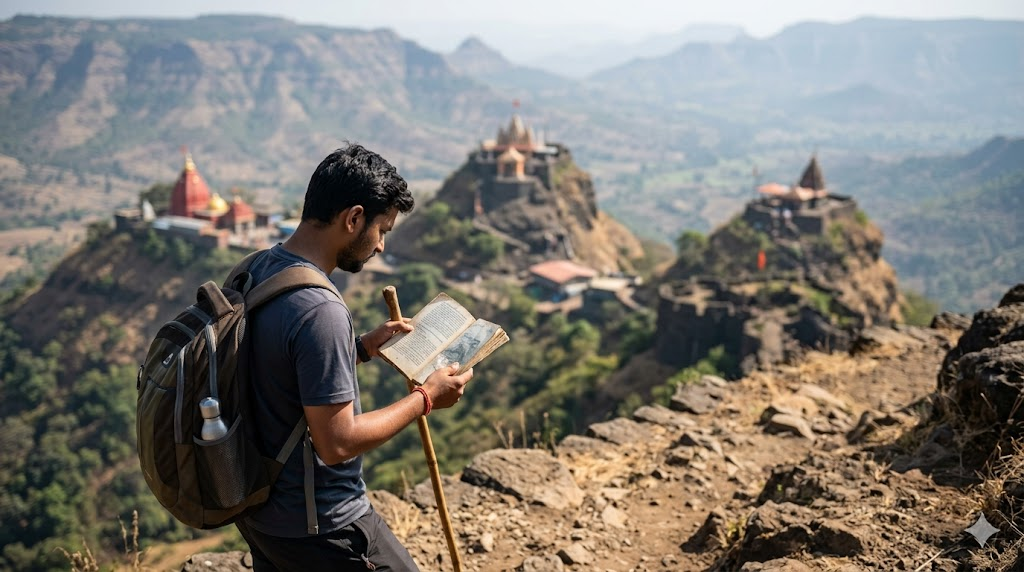
Mahurgad is not just one destination; it is a sacred triangle of three distinct peaks—Shri Renuka Mata, Lord Dattatreya, and Anusuya Mata. Navigating all three in a single day requires more than just spiritual devotion; it requires a rock-solid logistical strategy. After multiple visits, plenty of exhausted afternoons, and mapping out the exact distances and transport routes, I finally perfected the circuit.
If you are planning a pilgrimage in 2026, the landscape has evolved. With updated digital queues, better transit options, and shifting crowd dynamics, you need a modern approach. Here is my first-hand experience and step-by-step guide to mastering Mahurgad’s Sacred Triangle.
The 2026 Transit Strategy: How I Get to the Base
Before you can tackle the peaks, you have to reach the base efficiently. Many visitors make the mistake of relying entirely on unpredictable long-distance buses. I found that combining train travel with local transit is by far the most reliable method this year.
If you are traveling by train, the nearest major hubs are Nanded (about 130 km away) and Kinwat (roughly 50 km away).
Pro Tip: I highly recommend booking your train ticket to Kinwat if your route allows it. The journey from Kinwat to Mahur is significantly shorter, and in 2026, the local shared taxis operating right outside the Kinwat station are better regulated, offering a smooth, fixed-rate 90-minute ride straight to the Mahur base.
Once you arrive at the town of Mahur, you will rely on auto-rickshaws to move between the base points of the three different hills. Do not attempt to walk between the hills themselves; save your leg strength for the actual temple stairs.
Comparing the Three Peaks
To help you pace yourself, I put together this comparison table based on my most recent timing.
| Temple Peak | Deity | Approximate Stairs | Physical Difficulty | Best Time to Climb |
| Peak 1 | Shri Renuka Mata | ~200 – 250 | Moderate | 6:00 AM – 8:00 AM |
| Peak 2 | Lord Dattatreya | ~700 – 800 | High | 4:00 PM – 5:30 PM |
| Peak 3 | Anusuya Mata | ~100 – 150 | Low | 10:00 AM – 11:30 AM |
Peak 1: Shri Renuka Mata Temple
Because this is one of the three and a half Shakti Peethas in Maharashtra, the Renuka Mata temple draws the largest crowds. I always make this my absolute first stop of the day.
I start my climb no later than 6:30 AM. The morning air is crisp, and the stone steps are still cool. The climb is manageable—around 250 steps—and the pathway is well-covered. Reaching the top as the morning aarti concludes is an incredibly powerful experience.
In 2026, the temple administration has streamlined the entry process. There are now dedicated digital queue management systems that prevent the bottlenecks we used to see on the middle landing.
Pro Tip: Do not buy your offering (coconut and flowers) at the very bottom. Buy it from the vendors near the halfway point. It saves you from carrying extra weight during the initial ascent, and the flowers stay much fresher.
Peak 2: Anusuya Mata Temple
After descending from Renuka Mata, I immediately take a shared auto to the base of the Anusuya Mata temple. I slot this as my second peak because it is the easiest climb.
Sitting at just over 100 steps, it serves as an active recovery between the two larger hills. The atmosphere here is remarkably different from the primary peak. It is quieter, deeply serene, and surrounded by dense tree cover. I usually spend about forty-five minutes here, sitting in the courtyard and letting my heart rate settle.
By the time I finish darshan here, it is usually approaching noon. This is when I pause my climb. The midday Maharashtra heat is punishing, and attempting the largest peak right now is a mistake I only made once. I retreat to the town, have a substantial meal, and rest until the late afternoon.
Peak 3: Lord Dattatreya Temple
I save the most physically demanding peak for last. The Dattatreya temple sits on the highest peak, requiring a climb of nearly 800 steps.
I start this ascent around 4:30 PM. The sun is beginning to lower, casting long shadows that naturally shade the stairway. This climb is a test of endurance. I take intentional breaks every 100 steps. The beauty of doing this climb in the late afternoon is the panoramic view of the surrounding forests and valleys as the light turns golden.
Reaching the Shikhar (top) is incredibly rewarding. The energy at the Dattatreya temple during the evening hours is electric yet peaceful. Taking a moment to look out over the Mahurgad landscape from this altitude puts the entire day’s effort into perspective.
Pro Tip: Hydration is critical for this specific climb. The newly installed filtered water stations along the Dattatreya route are excellent, so you only need to carry a single refillable bottle rather than hauling three liters of water up the mountain.
Final Thoughts
Conquering the Sacred Triangle is completely achievable in one day, provided you respect the terrain and the climate. By structuring your day around the sun and prioritizing the peaks by crowd size and step count, you transform a potentially exhausting ordeal into a deeply fulfilling spiritual journey.
The 2026 Mahurgad Checklist
Before you pack your bags, run through this final checklist to ensure you are fully prepared:
- Secure your transport: Pre-plan your arrival via Nanded or Kinwat railway stations and know your onward travel distances.
- Time the first climb: Commit to starting the Renuka Mata ascent by 6:30 AM to beat both the heat and the heavy crowds.
- Pace your legs: Use the Anusuya Mata peak as a gentle mid-morning bridge before tackling the massive Dattatreya climb.
- Respect the midday sun: Strictly avoid climbing between 1:00 PM and 4:00 PM. Use this time to eat and rest in the main town.
- Pack smart: Wear footwear with genuine grip (the stone steps get slippery), carry a refillable water bottle for the new hydration stations, and keep small denomination cash for local autos connecting the base points.