
When I first planned to complete the Mahurgad Parikrama Yatra, I thought it would be a simple temple visit followed by a walk around the sacred area. I was wrong.
The journey turned out to be much more than covering a route or visiting famous temples. There were long stretches of walking, changing road conditions, crowds at important points, moments of silence, and a deep sense of spiritual connection that I did not fully expect.
For a first-time visitor, the biggest challenge is often not the walking itself. It is understanding how to approach the Parikrama, how to plan your time, what to carry, and how to avoid turning a meaningful yatra into an exhausting experience.
In this guide, I am sharing my experience of completing the Mahurgad Parikrama Yatra, the route I followed, what I learned along the way, and practical tips that can help you plan your own visit in 2026.
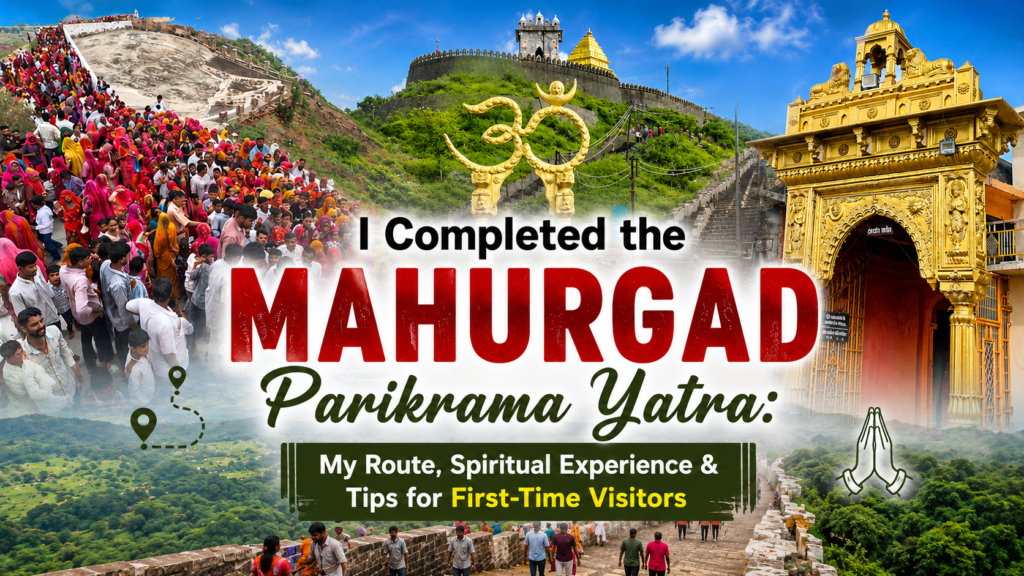
Why I Decided to Complete the Mahurgad Parikrama Yatra
Mahurgad, located in Maharashtra, is an important spiritual destination associated with Renuka Mata and other revered places connected with the region’s religious traditions.
I had already thought of Mahurgad as a destination where people come mainly for temple darshan. But when I learned more about the Parikrama Yatra, I realized that walking through the sacred landscape creates a very different experience.
Instead of rushing from one temple to another, I wanted to slow down and experience the journey itself.
That became my main lesson:
The Mahurgad Parikrama is not just about reaching the next temple. The walking between the sacred places is also part of the experience.
I decided to begin early and keep my schedule flexible rather than trying to complete everything in a hurry.
My Mahurgad Parikrama Yatra Route
The exact route and sequence followed by devotees can vary depending on local traditions, the occasion, guidance from temple authorities, and the specific Parikrama being observed.
For my visit, I planned the journey around the major sacred locations associated with the Mahurgad area and kept enough time for darshan, rest, and walking.
My Basic Parikrama Plan
| Stage | What I Focused On | My Experience |
|---|---|---|
| Starting point | Beginning the yatra with darshan and prayer | Helped me start with a calm mindset |
| Temple visit | Taking time instead of rushing through queues | More peaceful and meaningful |
| Walking section | Moving between important sacred areas | Physically demanding in some stretches |
| Rest stops | Water, food and short breaks | Extremely important during a long day |
| Final darshan | Completing the journey with gratitude | Felt more rewarding after the full walk |
One thing I quickly understood was that Mahurgad should not be treated like a race.
The distance may look manageable when viewed on a map, but walking during a yatra is different. You may stop for darshan, wait in queues, climb steps, take photographs, meet other devotees, or simply pause to absorb the surroundings.
The Moment I Realized I Had Underestimated the Journey
The first part of my journey felt easy because I was full of energy.
But after a few hours, I started noticing something important: small things matter during a Parikrama.
A slightly uncomfortable pair of shoes can become painful. Skipping breakfast can affect your energy. Carrying too much can make every step harder.
I also found that the weather can completely change the experience. During warmer months, hydration becomes essential. During the monsoon season, wet paths and slippery areas may require extra caution.
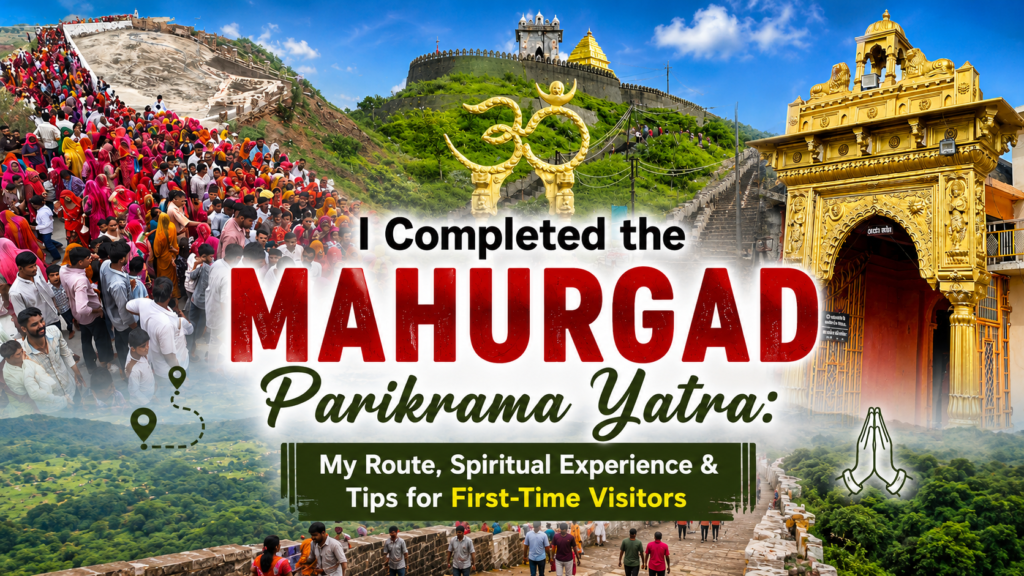
My Biggest Mistake
I initially thought carrying more items would make me better prepared.
Instead, I learned that a lightweight bag with only essential items is much more useful.
What I Recommend Carrying
- Drinking water
- A small snack
- Comfortable footwear suitable for walking
- A light towel or handkerchief
- Rain protection during the monsoon
- Basic personal medicines, if required
- A power bank for longer travel days
- A small bag that does not strain your shoulders
Pro Tip: Pack for the walk, not for the photos.
I found that a lighter bag improved my overall experience much more than carrying unnecessary items.
My Spiritual Experience During the Parikrama
The most memorable part of my Mahurgad Parikrama was not a single temple or viewpoint.
It was the feeling of gradually disconnecting from my normal routine.
When you are walking for hours, your attention naturally changes. You start noticing the rhythm of your steps, the sounds around you, the conversations of fellow devotees, and the changing surroundings.
There were moments when I felt physically tired, but those moments also made me slow down.
I stopped trying to follow a perfect schedule.
Instead, I focused on completing the journey respectfully and comfortably.
For me, that was the real spiritual value of the experience.
The Parikrama taught me patience.
A regular trip often encourages us to ask, “What is next?”
During the yatra, I found myself asking, “What am I experiencing right now?”
Mahurgad Parikrama: Morning vs Festival Day Experience
My experience also taught me that the timing of your visit can make a major difference.
| Factor | Early Morning Visit | Festival or Special Occasion |
|---|---|---|
| Crowd levels | Usually easier to manage | Can be significantly higher |
| Walking comfort | Often better in cooler hours | Depends on waiting time and weather |
| Darshan pace | Potentially more relaxed | Queues may take longer |
| Atmosphere | Quiet and peaceful | Energetic and devotional |
| Planning needed | Moderate | Much more important |
If you are a first-time visitor and want to focus on the walking and spiritual experience, I personally prefer starting as early as practical.
However, special occasions can offer a unique devotional atmosphere. The trade-off is that you should expect more people and allow additional time.
Pro Tip: Do not plan your return journey too tightly.
I would keep extra time because queues, traffic, weather, and rest breaks can change the schedule.
What I Would Do Differently If I Completed the Parikrama Again
After finishing the journey, I made a mental list of things I would change next time.
1. I Would Start Earlier
Starting early can help you walk more comfortably and avoid feeling rushed later in the day.
2. I Would Research the Specific Parikrama Route Before Arrival
This is especially important in 2026 because routes, access arrangements, crowd-management practices, and local instructions can change during major religious occasions.
Before beginning, I recommend confirming:
- The currently followed route
- Entry or walking restrictions
- Temple timings
- Festival arrangements
- Parking availability
- Any temporary changes caused by weather or local administration
3. I Would Build More Rest Time Into My Plan
My first instinct was to calculate the journey based only on walking time.
That was a mistake.
A Parikrama includes much more than walking.
You should also allow time for:
- Darshan queues
- Photography, where permitted
- Food and water breaks
- Unexpected crowd delays
- Short rest periods
My 2026 Tips for First-Time Mahurgad Parikrama Visitors
Here are the practical tips I believe will provide the biggest difference for first-time visitors.
Plan Your Journey in Two Parts
Instead of thinking, “I have to finish everything today,” divide the experience into:
- The spiritual route
- The travel and logistics
This simple approach helped me stay mentally relaxed.
Keep a Digital and Offline Plan
Mobile connectivity or battery life should not be your only source of information.
Before starting:
- Save important travel details
- Keep essential contact information available
- Carry a power bank
- Note your accommodation or vehicle location
Respect the Sacred Environment
The Parikrama is a religious journey for many devotees.
I found that the experience becomes more meaningful when visitors:
- Avoid littering
- Respect temple customs
- Dress appropriately
- Follow local instructions
- Avoid blocking pathways
- Keep noise levels respectful near prayer areas
Pro Tip for 2026: Check current arrangements shortly before you travel.
Festival schedules, road access, crowd-control systems, parking areas, and temple procedures may change. A quick confirmation before departure can prevent unnecessary confusion.
Is the Mahurgad Parikrama Suitable for First-Time Visitors?
In my opinion, yes—but preparation makes a huge difference.
You do not need to be an experienced trekker to enjoy the journey. However, you should honestly consider your walking comfort, the weather, and the time available.
I would especially recommend that first-time visitors avoid making the mistake of combining:
- A long-distance journey to Mahurgad
- Multiple major temple visits
- The full Parikrama
- And an immediate return trip
…all without enough rest.
If possible, give yourself sufficient time so the yatra does not become unnecessarily tiring.
Final Thoughts: What the Mahurgad Parikrama Taught Me
Completing the Mahurgad Parikrama Yatra gave me something more valuable than a completed travel itinerary.
It reminded me that some journeys are not meant to be rushed.
I started the day thinking about the route, the distance, and the temples I wanted to visit. By the end, I was thinking more about the experience itself.
The walking, waiting, resting, praying, and meeting fellow devotees all became part of the journey.
If you are planning your first Mahurgad Parikrama, my advice is simple:
My First-Time Visitor Checklist
- Confirm the current Parikrama route before your visit
- Check current temple timings and local arrangements
- Start as early as practical
- Wear comfortable walking footwear
- Carry water and a small snack
- Pack lightly
- Allow extra time for queues and rest
- Prepare for changing weather conditions
- Respect temple traditions and local instructions
- Keep your travel schedule flexible
- Focus on the journey instead of rushing to complete it
My final lesson was simple: Mahurgad Parikrama is best experienced with preparation, patience, and respect for the sacred journey.
If you plan well, travel responsibly, and give yourself enough time, your first Parikrama can become much more than a temple visit—it can become a journey you remember long after you return home.