
I used to think Tambul Vida Prasad was just a sweet after-meal offering. That changed the first time I watched how carefully people prepared it, how respectfully they received it, and how naturally it fit into worship, hospitality, and community life. What looked simple on the surface turned out to carry a deep cultural memory.
Tambul, in many Indian traditions, is more than a mouth freshener or a ritual bite. It is a symbol of welcome, respect, auspiciousness, and shared devotion. In devotional settings, especially in places where Tambul Vida is offered as prasad, it becomes part of the sacred experience rather than just a food item. Sources on Maharashtrian tradition note that Tambul Vida is offered as prasad at Renuka Mata in Mahur and is also associated with festivals such as Gauri-Ganpati, while broader cultural references describe tambul as a traditional offering used in worship, weddings, and hospitality.
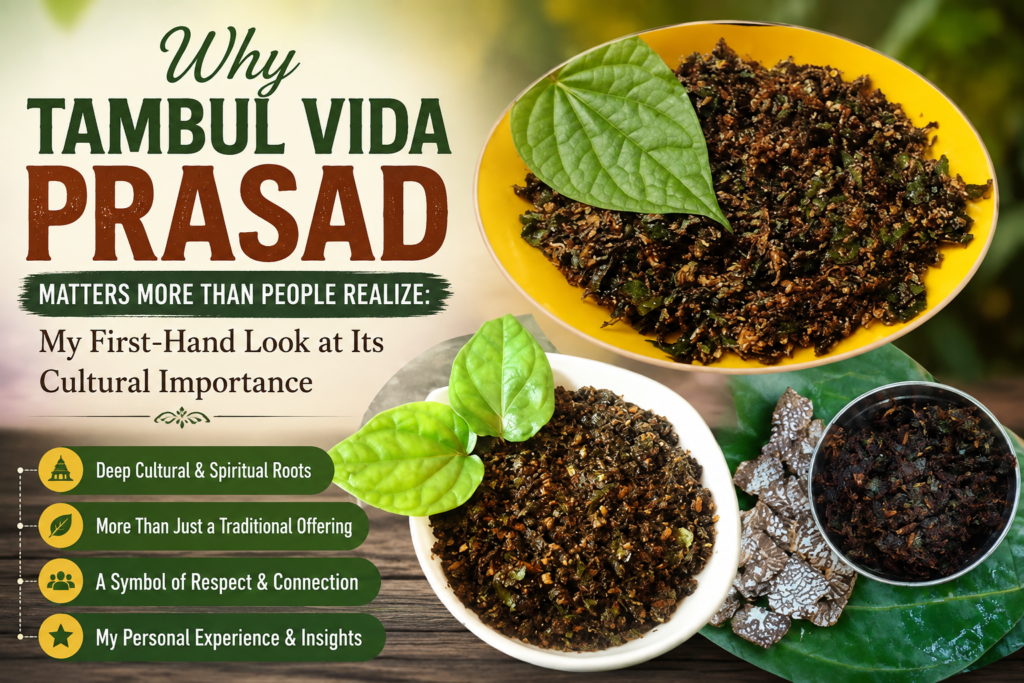
What Makes Tambul Vida Different From Ordinary Prasad?
The first thing I noticed is that Tambul Vida feels both ritualistic and practical. It carries devotion, but it also reflects everyday Indian wisdom: it is aromatic, digestible, easy to share, and deeply familiar. In many homes and temples, prasad is not only about taste; it is about the feeling of grace that comes with receiving something prepared with care. That is why prasad is treated as an act of seva and surrender, not just distribution of food.
Tambul Vida also stands out because it connects multiple layers of culture at once:
- religious offering
- after-meal tradition
- sign of hospitality
- symbol of social warmth
- regional identity
That combination is rare. Many offerings are sacred. Many foods are traditional. Tambul Vida is both.
Why It Holds Cultural Importance
1) It connects devotion with daily life
One reason Tambul Vida matters so much is that it does not feel separate from ordinary life. It belongs to temple rituals, but it also belongs to family gatherings, festive meals, and welcoming guests. Traditional references describe tambul as something exchanged in worship, weddings, and social customs across India, which shows how deeply it is woven into everyday culture.
That matters because culture stays alive when it is lived, not just remembered.
2) It carries the idea of respect
When someone offers Tambul Vida, they are not simply handing over a snack. They are saying, in a quiet traditional way, “You are welcome here.” In Indian culture, sharing prasad and ritual offerings often expresses equality, blessing, and community. That symbolic meaning is part of why prasad still feels powerful even today.
3) It preserves regional heritage
In Maharashtra, Tambul Vida has a particularly strong cultural identity. Some local references specifically mention its role in Mahur and its association with Renuka Mata, where it is treated as a main prasad. That local connection gives it heritage value, not just religious value.
A Simple Comparison That Says a Lot
| Aspect | Ordinary Sweet | Tambul Vida Prasad |
|---|---|---|
| Purpose | Mostly taste | Devotion, hospitality, and tradition |
| Setting | Casual or festive | Temple, home, ritual, and celebration |
| Meaning | Food item | Cultural symbol |
| Memory | Temporary | Passed through generations |
| Value | Personal preference | Shared identity |
The table makes one thing clear: Tambul Vida is not important because it is complicated. It is important because it is layered.
Why People Still Care About It in 2026
In 2026, many traditions survive only if they remain meaningful in modern life. Tambul Vida has stayed relevant because it adapts without losing its soul. People still want authentic, local, and rooted experiences. They still look for rituals that feel personal instead of commercial. That is exactly where Tambul Vida fits.
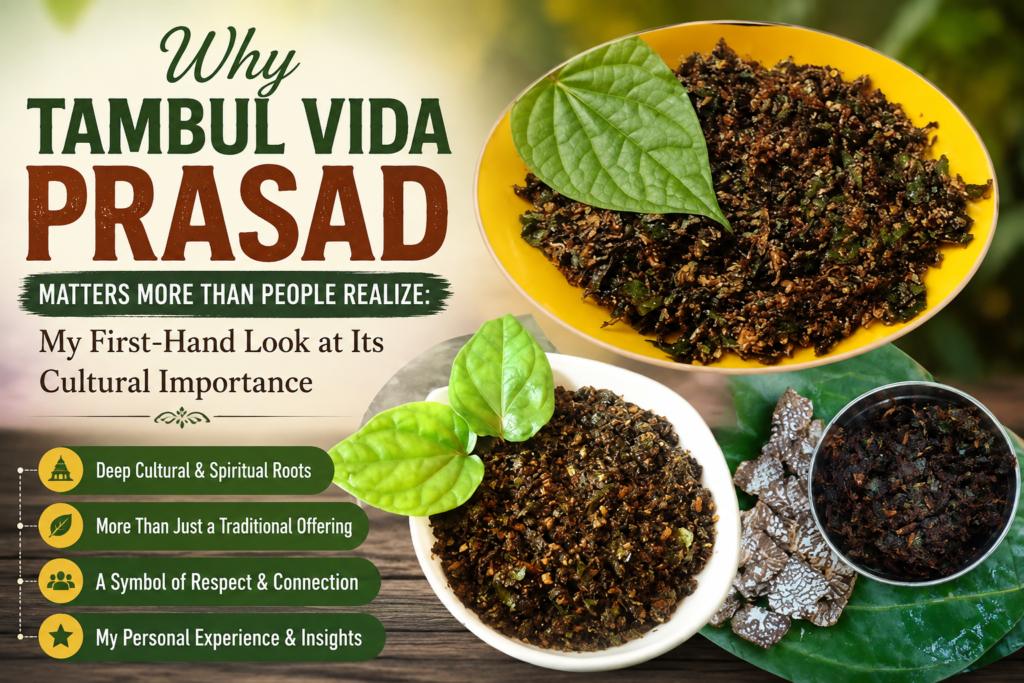
I also think modern devotees appreciate offerings that feel clean, simple, and culturally transparent. Traditional dry paan-style mixes have become easier to understand because more people now pay attention to ingredients, sourcing, and heritage. Commercial product descriptions for Maharashtrian Tambul Vida often highlight betel leaf, fennel, coriander seed, gulkand, and related aromatic ingredients, which reflects how the tradition is being preserved in a recognizable form.
Pro Tip: If you are writing or speaking about Tambul Vida in 2026, focus on the experience, not just the ingredients. People connect more strongly with the story: temple, blessing, family tradition, and regional identity.
My Personal Take: Why It Feels So Special
What struck me most is that Tambul Vida creates a quiet moment after the main ritual. The big part of worship is done, but the tradition does not end there. The prasad becomes a closing gesture. It signals completion, gratitude, and continuity.
That is why I believe Tambul Vida is culturally important in a way many people underestimate. It keeps three things alive at once: memory, meaning, and togetherness.
It tells us that culture does not always announce itself loudly. Sometimes it arrives in something small, aromatic, and shared with care.
Pro Tips for Understanding Its Cultural Value
Pro Tip: When you visit a temple where Tambul Vida is offered, observe the sequence carefully. The way prasad is prepared, offered, and received tells you a lot about local devotion.
Pro Tip: In blog writing, avoid reducing Tambul Vida to “just paan.” That misses its religious and cultural identity.
Pro Tip: If you are explaining it to a wider audience, connect it to hospitality, ritual, and regional pride. Those are the three ideas most readers understand quickly.
Practical Signs of Its Importance
- It appears in temple offerings and festive traditions.
- It represents respect rather than mere consumption.
- It links family customs with religious practice.
- It reflects regional Maharashtrian identity.
- It survives because it still feels useful, meaningful, and sacred.
Conclusion: A Simple Checklist to Appreciate Tambul Vida Properly
Before you dismiss Tambul Vida as a small tradition, check these points:
- Did it appear in a temple or family ritual?
- Was it offered with care and intention?
- Did it act as a sign of welcome or blessing?
- Is it tied to a local temple or regional custom?
- Does it carry memory from one generation to the next?
If the answer is yes, then you are looking at more than a prasad. You are looking at a living cultural practice.
Tambul Vida matters because it reminds us that the strongest traditions are often the quietest ones. They do not need grandeur to survive. They only need meaning, repetition, and respect. That is exactly why this prasad continues to hold cultural importance today.